What is important to understand before choosing laser equipment?
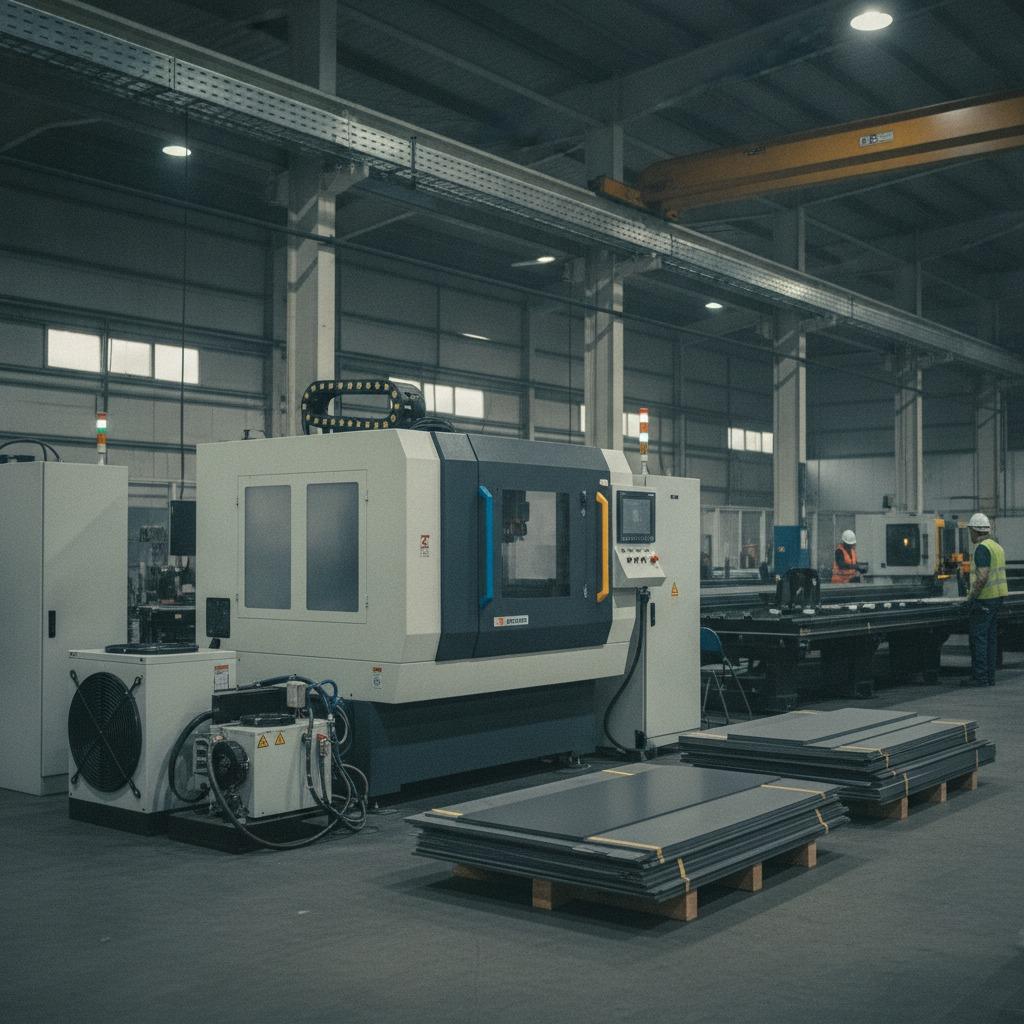
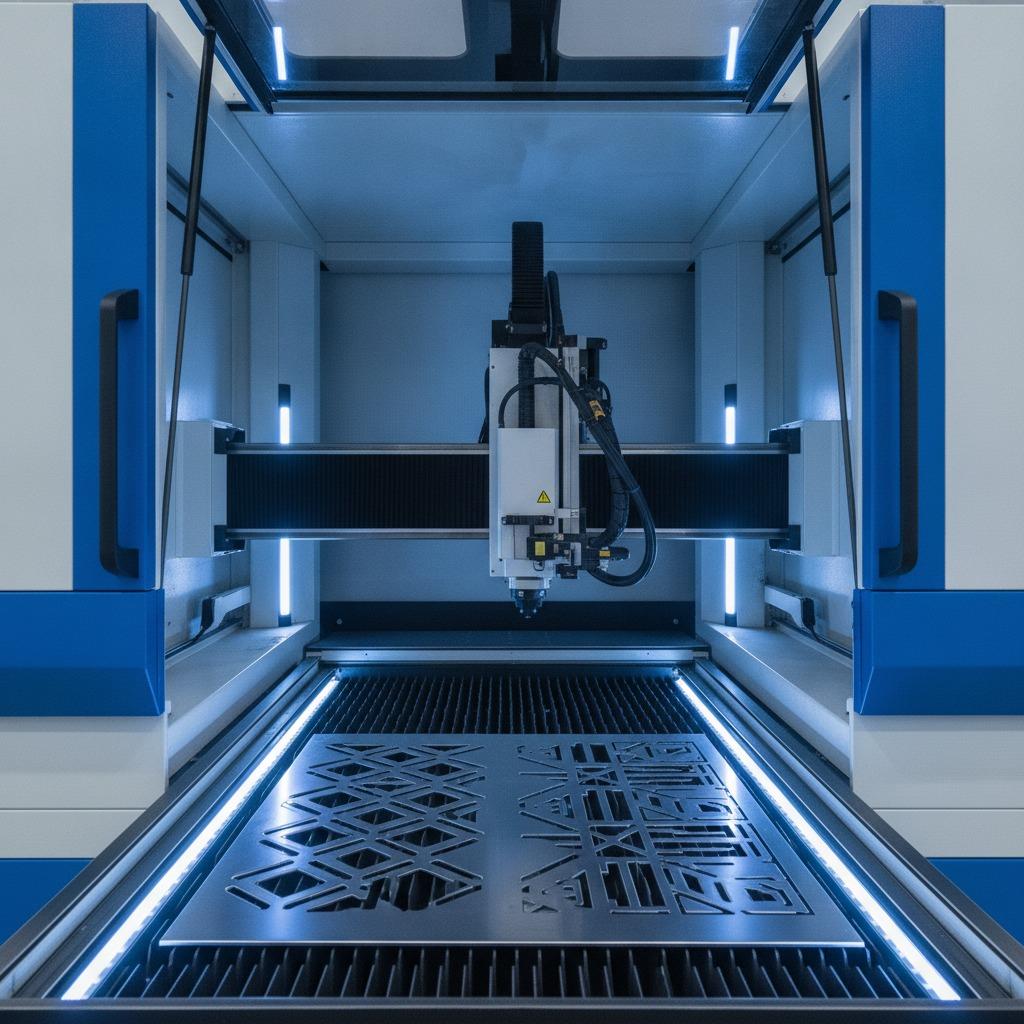
When it comes to modernizing metalworking, the request for a laser cutting machine almost always boils down not to a single machine, but to an entire production system: a beam source, cutting head, cooling, gas supply, software control, and service. That's why buyers—engineers, suppliers, and product teams—usually compare not only price but also how well the solution can handle real-world workloads, how quickly it can be serviced, and whether the line can be scaled up without significant downtime.
In the Russian market, this issue has become especially practical. According to data cited by TAYOR, companies are increasingly replacing European equipment with Chinese or localized versions, and then carefully consider the availability of spare parts, staff training, and supplier response times. In this logic, the choice is made not "by catalog," but by how the machine fits into the workshop.
How a modern industrial laser circuit works
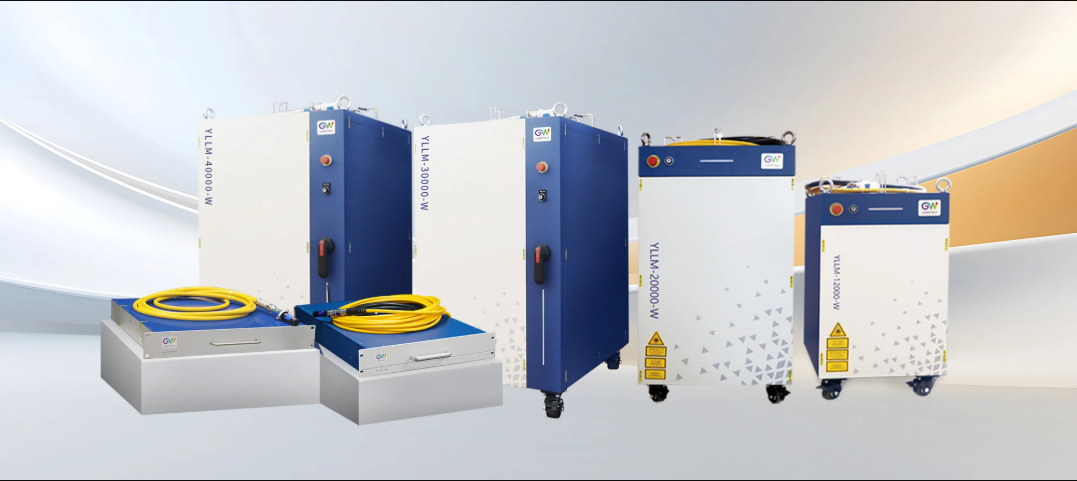
The data provided refers to industrial fiber laser source/laser generator sets from the GW family, with designations such as YLM-4000-W, YLM-3000-W, YLM-2000-W, and YLM-1200-W. These cabinets are floor-standing units in a closed metal enclosure, mounted on wheels, with service elements on the front panel and lifting loops on the top. This is an important detail for a manufacturer: this design is typically easier to move within a production area and more convenient to service without completely disassembling the line.
It's worth noting that customers are often tempted to view the power supply as "just a box with power." In practice, it's just one component. For laser cutting, welding, surfacing, or cleaning, the associated modules are also critical: cables, hoses, control interfaces, cooling, as well as compatibility with the cutting head and line automation. The image also shows additional low-profile units with yellow hoses or cables, but their exact function isn't confirmed by the photo, so drawing a definitive conclusion would be inappropriate.
What does having several power versions in one series provide?
The availability of several options in the line—from 1200 to 4000 W, judging by the markings—is more useful for the buyer than it seems at first glance. This allows for the selection of a power source for a specific task rather than a single "universal" configuration: thin sheet metal, thicker metal, a pipe section, or a combined production cell.
For an engineer, this is a question not only of productivity but also of operating mode. Excessive power in some applications means overpaying for equipment and energy, while insufficient power means low cutting speed, excessive thermal load, and inconsistent edge quality. In metalworking, such imbalances quickly translate into excessive gas consumption, increased wear on consumables, and lost time during readjustment.
When it makes sense to look at a more powerful source
If a section handles thicker workpieces, high production volumes, or multiple shifts, excess capacity often becomes less of a luxury and more of a way to reduce bottlenecks. However, it's important not to confuse high capacity with automatic benefits: the machine must be properly integrated into the production cycle, otherwise, some of its potential will simply remain on paper.
What to look for when comparing suppliers
Here, the winner is usually not the one with the biggest promises, but the one with the ability to cover the entire supply and service chain. Three things are especially important for industrial buyers: the availability of consumables, the speed of repairs, and the ability to train personnel on working equipment. The information about TAYOR specifically states that its main production is located in Shanghai, with assembly in the Moscow region. This can be a significant advantage for the market: local assembly and warehouse availability often reduce downtime during service and supply.
The company also notes that it trains clients on-site and works with heavy industry solutions. This is no small matter. With laser equipment, operator and setup errors often cost more than any differences in specifications. Incorrect focusing, improper edge preparation, or selecting the wrong cutting mode quickly eat into the cost of an order.
Common mistakes when purchasing a laser source or cutting system
The first mistake is evaluating capacity alone. The second is forgetting about integration with the existing line. The third is failing to check how convenient it will be to obtain consumables and service support after launch. On paper, all the solutions may look comparable, but on the shop floor, the differences become noticeable within the first month.
There's another practical caveat: if a supplier displays a wide range of products, from sheet metal cutters to pipe cutters up to 350 mm in diameter, this indicates a broad product line, but it doesn't eliminate the need to specifically verify the compatibility of a specific source with your automation system and application. Versatility in the catalog doesn't equal versatility in production.
Who is this class of equipment suitable for?
Such industrial units are primarily of interest to integrators, metal fabrication plants, equipment manufacturers, and workshops where cutting, welding, and cleaning are combined. For them, having multiple power versions in a single family is particularly useful: it allows for unification of the machine tool fleet, streamlining training, and simplifying spare parts storage.
If your goal is to upgrade a production line, rather than simply install the "most powerful" laser, it makes sense to compare solutions based on a combination of factors: supply stability, maintainability, availability of training, compatibility with laser heads, and the potential for future line expansion. In Russian practice, this is often more important than a pretty description in the data sheet.
A short list of questions to ask your supplier before ordering
What should be clarified in advance?
What specific configuration is offered for your task?
How are the supply of consumables and service organized?
Is the power source compatible with your cutting head, automation and cooling?
Is there training for operators and adjusters?
How quickly can I get support during launch and operation?
Where to go next
If you're choosing a laser solution for metal cutting, welding, or related operations, start with the process technology, not the price. Compare thicknesses, workloads, shift schedules, service requirements, and staff availability. Then, compare specific models and configurations.
For inquiries regarding industrial laser systems and localized support, TAYOR provides the website tayor-russia.ru, phone number +7 (495) 320-75-88, email sales@tayor-russia.ru, and a location in the iShchyolkovo Industrial Park in Shchyolkovo, Moscow Region. If you need a working production configuration rather than just some abstract "laser machine," it's best to start with this type of conversation—focusing on the task at hand, not on marketing hype.