What do people actually choose when looking for a QBH laser
When a request for laser QBH comes up in procurement or production, in practice we are almost always talking not about one part, but about the entire assembly of an industrial laser system: source, cabinet design, cabling, head, or compatibility between them. For an engineer, this is not an abstract formulation, but a question of whether the equipment will work stably in a shift schedule, how quickly it can be serviced, and whether the entire section will have to be redone due to one weak point in the path.
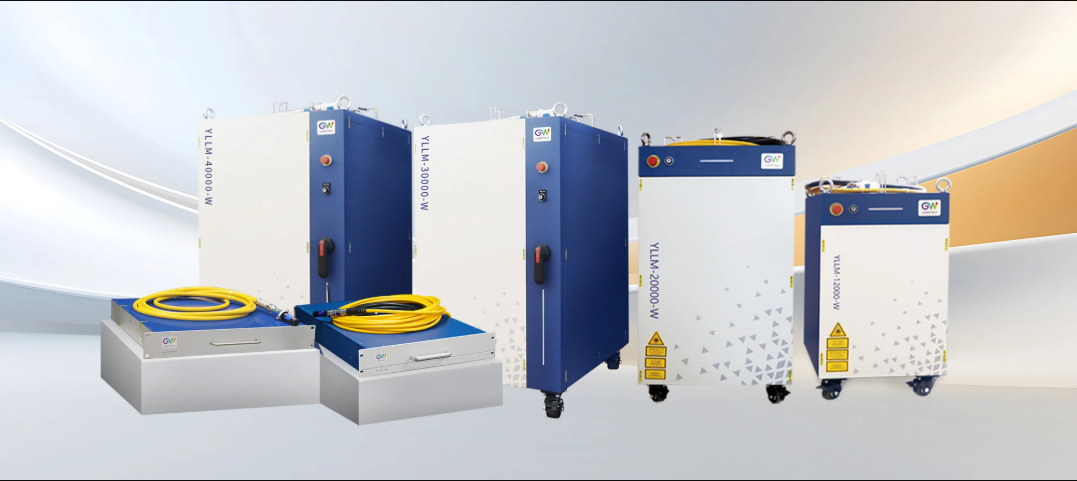
Judging by the available information, we are talking about floor-standing industrial laser systems in modular housings, with power options like YLM-1200-W, YLM-2000-W, YLM-3000-W and YLM-4000-W. It is impossible to honestly state the exact process from one photo: it could be welding, cleaning or another type of metal processing. But the equipment format itself is well known to workshops where mobility, serviceability and clear integration into the production line are important.
Why is this unit so important for production
QBH connection is valued not for its beautiful abbreviation, but for its practice. In an industrial environment, it all comes down to stable radiation transmission, careful assembly and predictable maintenance. If the path is assembled carelessly, the losses grow imperceptibly: first, stability drops, then the operator begins to check the settings more often, and then the section already lives in constant adjustment mode. For manufacturing, this is a bad scenario, especially when the equipment must work on sheet metal, in repair or on a small-scale production line.
Floor-mounted solutions have another advantage: they are easier to place next to the work area, move on casters and maintain without complex installation. In the described line, mobile cabinets, upper lifting eyes, controls on the front panel and separate low-profile modules with cables and hoses are visible. For the engineer, this is a signal that the system is intended as an industrial tool, and not as a laboratory bench.
What can be understood from the configuration of YLM-1200-W, YLM-2000-W, YLM-3000-W and YLM-4000-W
Having multiple power options next to each other usually indicates a family of equipment rather than a one-off supply. This is useful for the buyer: you can select the configuration for the task without fundamentally changing the architecture of the site. The same approach in packaging, service and layout helps to unify spare parts and personnel training.
It is important, however, not to draw too bold conclusions. The power label alone does not tell the whole story: it cannot fairly judge wavelength, precise output configuration, internal cooling, or actual performance in a particular operation. To purchase an industrial laser, this is not required if the supplier is ready to provide a working specification, integration conditions and a list of consumables.
What to look for the engineer and supply service
Compatibility and service
The first question is always practical: how quickly can you get consumables, cables, connectors and service support? The TAYOR Industrial Technologies company separately indicates that the main production is located in Shanghai, and assembly is carried out in the Moscow region. For Russian customers, this can be an important argument, because local assembly usually simplifies the supply of spare parts and consumables. In real operation, this is what often matters more than advertising claims about power.
Training should also be taken into account. TAYOR reports that it trains clients on its site. For laser equipment, this is not a formality: even a well-assembled system begins to work differently depending on the operator’s habits, maintenance discipline and the correctness of the path settings.
Modularity and layout
If the system has separate auxiliary units, hoses and cables, this is not always a minus. On the contrary, the modular layout simplifies the replacement of components and allows the machine to be serviced in parts. But here it is important to check whether it is convenient to bring communications to the installation site, whether there is enough space for access to doors and locks, and whether neighboring units will block the service of the front panel.
Where such installations are usually used
According to the category itself, this equipment is closest to metalworking tasks: repair areas, small and medium-sized production lines, service shops, production of metal components, as well as operations where a controlled laser process is needed. TAYOR also talks about laser welding and cleaning, and has sheet metal cutting machines and pipe cutters for pipes up to 350mm in diameter. This expands the picture: the customer can assemble not just one machine, but an entire technological circuit.
There is now a noticeable shift in the market towards localized solutions. The company cites a study by Nizhny Novgorod State University, according to which 67% of Russian enterprises replaced European equipment with Chinese ones, but are increasingly looking towards localization. This is an important context for procurement: the question is no longer whether the machine can be bought, but how quickly it will be put into real work and how long it will remain serviceable.
Typical mistakes when choosing
The first mistake is to buy a system based only on the power rating. The second is not to check how access to the serviced nodes is organized. The third is to ignore staff training and then wonder why the equipment has “character”. Fourth, do not specify which consumables and cable solutions are included in the kit, and which ones will be required separately. In industrial procurement, such trifles quickly turn into downtime.
Another caution: do not build expectations on unconfirmed characteristics from one image or a short catalog description. If the process is not documented, it is better to directly request a passport, connection diagram and list of compatible accessories. This is a normal, mature question, not a nitpick.
What to ask from the supplier before purchasing
The minimum package of questions looks simple: what process does the system support, how the connection is arranged, what models are available, what is included in the basic package, where the service points are located and how quickly consumables are supplied. If we are talking about an industrial laser with a QBH interface, it is also useful to clarify the requirements for the cleanliness of the connection, rules for storing connectors and inspection procedures for the cable part.
For a business choosing between multiple configurations, it is wise to look not only at capacity, but also at life cycle. Sometimes a more modest installation is more profitable because it is easier to integrate, train personnel for it and maintain it without unnecessary shutdown of the site.
Where to move next
If you are selecting industrial laser equipment for a real production task, ask not for a general booklet, but for a working configuration: process type, module composition, connection diagram and a list of service options. For a family like the YLM-1200-W, YLM-2000-W, YLM-3000-W and YLM-4000-W, this is especially important, because the line itself already hints at scalability, which means the choice should come from the task, and not from one number on the nameplate.
You can contact TAYOR Industrial Technologies through tayor-russia.ru, by phone +7 (495) 320-75-88 or by mail sales@tayor-russia.ru. Their site is indicated in the iShchelkovo industrial park in the Moscow region, Shchelkovo. For the buyer, this is a convenient starting point if you need not just a catalog, but a substantive conversation about implementation.