

What is high-efficiency 976nm optical pumping technology?
Highly efficient 976 nm dual-side pumping technology is a method for generating and amplifying optical signals by exciting the gain medium with specialized fixed-wavelength laser pump sources. The technology's core principle is the use of 976 nm laser emitters and a dual-side pumping scheme to enhance the overall efficiency of the laser system, increase output power, and improve operational characteristics.
Advantages of highly efficient 976 nm pump technology
The 976 nm pumping scheme effectively eliminates the nonlinear optical issues inherent in 915 nm pumping solutions. The absorption coefficient of the gain fiber for 976 nm is 2-3 times higher than for 915 nm. This increased absorption requires a shorter gain fiber, resulting in a number of technical advantages: primarily, reduced nonlinear effects and reduced raw material costs for the gain fiber.
Additional cost benefits are provided by optical efficiency: 976 nm pump sources have approximately 10% higher optical efficiency than 915 nm emitters. Therefore, the 976 nm pump scheme demonstrates maximum cost effectiveness in the production of high-power fiber lasers.
Leader in mass industrial adoption of 976 nm technology in China
Since its founding, GW Laser (Guanghui Laser) has specialized in the industrialization of high-brightness laser solutions based on 976 nm bidirectional pumping in China. Through continuous technical breakthroughs and collaboration with partners across the supply chain, the company has established full-scale serial production of equipment using 976 nm pumping technology—GW Laser became the first company in China to implement industrial mass production of this technology.
GW is the first company in China to master the mass production of products based on 976nm pumping technology and is a national pioneer in the mass production of products with this solution.
The company's equipment boasts a photovoltaic conversion efficiency exceeding 42%, while industry competitors achieve only 25-30%. This allows end users to significantly reduce operating costs; among Chinese manufacturers, only GW Laser achieves a photovoltaic efficiency above 40%.
A single-mode 3000-watt laser with a single resonator cavity is implemented with a 14-µm-diameter fiber output, and the laser beam quality parameter M² is less than 1.1—currently the physical limit for industrial fiber lasers.
High-power kilowatt-range laser systems have become the primary tool for laser cutting medium and thick metal sheets. Operating one such laser saves over 100,000 yuan annually on electricity, significantly reducing the customer's operating costs.
Technical breakthroughs in high-efficiency 976 nm pump technology
After years of research and development, GW Laser specialists have successfully implemented full-scale industrial application of 976 nm pumping technology and implemented a range of optimizations and innovative solutions in the following areas:
Selection of pumping sources
The company's development began with the creation of specialized 976 nm chips: engineers redefined and customized 976 nm pump sources, fully adapted to the conditions of mass industrial production.
Chip and Water Cooling Plate Sensitivity Project
The company's specialists participated in the design of thermal substrates and pump source chip designs to optimize multi-element monoblock encapsulation technology and improve heat dissipation. At the same time, the direct water cooling system was tuned: optimal flow rates, coolant composition, and other characteristics were selected to ensure the stability of all key performance indicators. GW Laser has developed an original solution to the problem of cooling 976 nm pump sources and has received patents for this invention from national and international patent offices.
Structural design and thermal control of welded joints
Based on multiple computer simulations of thermal processes and practical tests, an innovative design of water cooling channels and cooling plates has been developed that eliminates the influence of temperature fluctuations in the cooling system on the laser output parameters.
Because the gain fiber intensely absorbs 976 nm radiation, the energy density at the fiber splice points becomes extremely high. GW Laser's proprietary thermal control technology for spliced joints has overcome the challenges of maintaining thermal balance at ultra-high power.
Residual radiation treatment
Residual radiation processing is a critical technological process that ensures long-term thermal stability of fibers when operating under 976 nm pumping conditions. GW Laser's proprietary residual radiation processing method prevents mechanical damage to optical components and guarantees the stable operation of high-power laser systems.
Comprehensive design optimization to improve laser output characteristics
By comprehensively optimizing the laser oscillator design, an integrated thermal control system, adjusting the reflective characteristics of diffraction gratings, and other parameters, it is possible to suppress the effect of mode instability and nonlinear optical phenomena, ensuring a stable, high-power single-mode laser output from a single resonator cavity.
What is high-efficiency 976nm optical pumping technology?
- Exhibition activities
Posted by Taylor Industrial Technologies | Laser Equipment Manufacturing On Jul 24 2026
Featured Blogs
Share On
Featured Blogs
What is laser mode output control?
What is laser mode output control? Laser mode control is the process of adjusting laser operating parameters (beam shape, power distribution, and other parameters) to control specific laser modes (e.g., Gaussian, Helmholtz, and other specialized modes). This adjustment affects the laser beam quality, focusing characteristics, and energy transfer efficiency, allowing for optimization of laser performance in various technological processes and applications. Fine-tuning the laser mode output improves the precision and productivity of operations such as laser welding, cutting, and marking, fully satisfying the laser beam performance requirements for specific tasks.
What is FRM laser?
What is FRM laser? The FRM (Flexible Ring Mode) laser generates two independently controlled coaxial laser beams through a single fiber. The two beams are separately injected into the fiber core and its outer ring coating, then focused onto the workpiece surface to form a composite light spot. This opens up wide possibilities and flexibility for laser welding technologies.
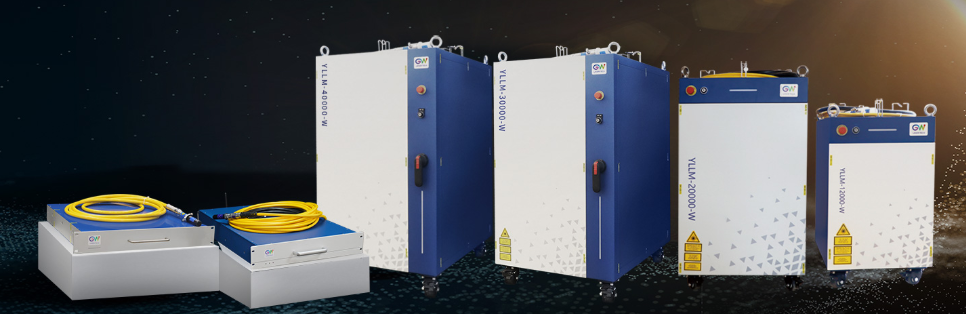
What is high-efficiency 976nm optical pumping technology?
What is high-efficiency 976nm optical pumping technology? Highly efficient 976 nm dual-side pumping technology is a method for generating and amplifying optical signals by exciting the gain medium with specialized fixed-wavelength laser pump sources. The technology's core principle is the use of 976 nm laser emitters and a dual-side pumping scheme to enhance the overall efficiency of the laser system, increase output power, and improve operational characteristics. Advantages of highly efficient 976 nm pump technology

What is a laser?
What is a laser? Laser is an acronym for "Light Amplification by Stimulated Emission of Radiation." Laser generation is based on the phenomenon of stimulated emission: this process occurs in specialized materials (gases, semiconductors, solids, or liquids) under the influence of external energy. A laser beam is strictly monochromatic, meaning the radiation from the laser source is characterized by a single wavelength, without dispersion across the spectrum—essentially pure monochrome light. The laser beam propagates with high directivity, possesses concentrated energy, and maintains focus even over long distances.