


Review 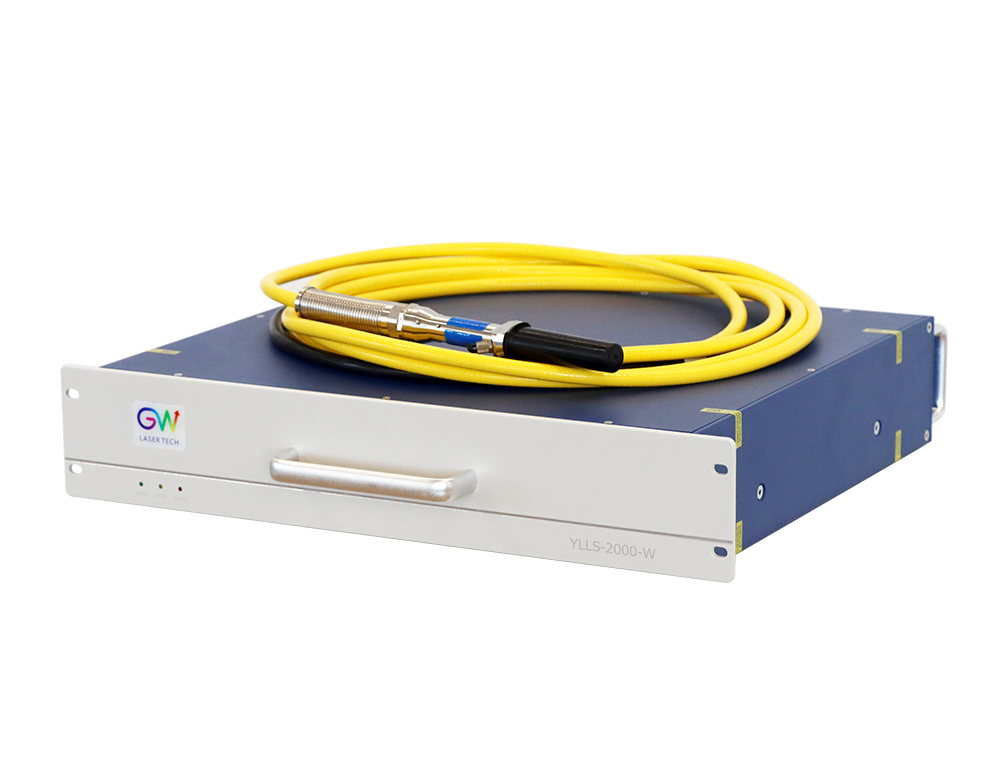
A laser source in an industrial line solves two practical problems: it must reliably transmit energy to the processing head and avoid downtime during integration, maintenance, and repair. The photo shows a compact, modular unit in a metal housing with the GW Laser Tech label, a front panel, status indicators, and a connected fiber optic cable path with a manual processing head. This format is convenient for the buyer because the source can be integrated into the shop floor, used in a mobile station, or integrated into metal maintenance work. However, a single image cannot accurately confirm the laser type, actual power, wavelength, cooling system, and intended use of the head, so key parameters should be verified against the data sheet and factory specifications.
The front panel bears the designation YLLS-2000-W. This may indicate a 2000-watt rating, but it cannot be used as a definitive technical specification without verification. When purchasing, it's not just the number in the designation that matters, but also compatibility with a specific operation: welding, cleaning, marking, or other processing. This is where the laser source becomes critical, as it determines process stability, weld repeatability, cleaning quality, ease of setup, and service life.
Key design features
Judging by its visible features, the device is housed in an industrial enclosure for use in a workshop. The top cover is blue, the front panel is silver, and there's a handle for carrying or mounting, along with prominent indicator lights. This configuration is typically chosen for environments where equipment needs to be frequently moved, maintained, and quickly connected to external equipment.
What can be assessed from a photo?
A cable harness with a thick yellow flexible hose, a metal cylindrical fitting, and a black handle is visible. This resembles a connection between the power source and the handheld workpiece via a fiber or cable path. For industrial users, this is a plus if they need access to large parts, on-site repairs, or work in hard-to-reach areas. However, the exact purpose of the handle is not confirmed in the image, so it cannot be concluded that it is specifically designed for welding or cleaning.
Materials and execution
Enclosures of this class are typically made of metal to ensure rigidity, protection of internal components, and ease of service access. The exterior finish is typically designed for a workshop environment: resistance to dust, accidental contact, transportation, and installation in a production cell. It's important for the buyer to confirm with the supplier the specific coatings, protection levels, and layout options available, as these directly impact the service life in a specific workshop.
Tayor Industrial Technologies specializes in industrial laser solutions and supports customers with assembly in the Moscow region and the availability of spare parts and consumables. This reduces the risk of extended downtime for businesses, especially if the equipment operates continuously and requires prompt service.
Manufacturing process and integration
When selecting such equipment, not only the unit itself is typically assessed, but also the entire application: power supply, cooling, control interfaces, cable routing, compatibility with the workhead, and operator requirements. In real-world production, this means the laser source must be compatible with the process flow chart and line tooling. If the unit is to be automated, additional checks are made of the control signals, remote diagnostics capabilities, and accessibility to service settings.
The company emphasizes the practice of on-site customer training, which is especially useful when launching a new process. For a factory or service center, this reduces the likelihood of errors at the start, when staff have not yet mastered operating modes, alignment procedures, and basic maintenance.
Where is it used?
This type of equipment is in demand in metalwork repair, assembly areas, parts production, service departments, and automated workstations. When used as part of a manual system, the source can be convenient for localized processing of large parts where transferring the part to the machine is difficult. When integrated into a production line, repeatability, load capacity, and intuitive service become priorities.
For heavy industry and related sectors, it's not abstract characteristics that are particularly important, but rather applied parameters: how easy it is to replace consumables, how quickly components are delivered, whether the unit is compatible with an already installed head, and whether the configuration can be scaled to suit a new task.
Quality control and what to check before purchasing
Since precise electrical and optical characteristics cannot be confirmed from an image, it's important to request a data sheet, connection diagram, and a list of compatible components before ordering. Information on power, emitter type, operating mode, cooling, dimensions, weight, and power requirements is essential. This is especially important if the equipment is being installed in an existing line with existing space, ventilation, or electrical network limitations.
A good practice for buyers is to request a demonstration on their own equipment, verify the stability of the startup, the user-friendliness of the interface, and the availability of service support. If the task involves heavy loads, it's worth discussing the operating reserve and maintenance schedule separately.
How to choose a configuration
When selecting a machine, consider the type of operation, required throughput, metal thickness and thermal conductivity, operating mode, and level of automation. For some companies, mobility is critical, while for others, continuous operation within a production line is crucial. It's helpful to determine in advance whether manual processing, axial positioning, robotic interaction, or just a compact source with an external head are required. The more precisely the task is described, the easier it will be for the supplier to select the appropriate configuration and avoid offering an overkill option.
Contact the supplier
If you need an industrial laser source for your workshop, repair, or assembly line, request a technical specification, verify connection compatibility, and request confirmation of the YLLS-2000-W model's specifications. For selection, demonstration, and service support, please contact Tayor Industrial Technologies: the company specializes in industrial laser solutions, provides training, and maintains the supply of spare parts and consumables. This is especially important when the equipment needs to perform reliably in real-world production, not just on a test bench.